Insights

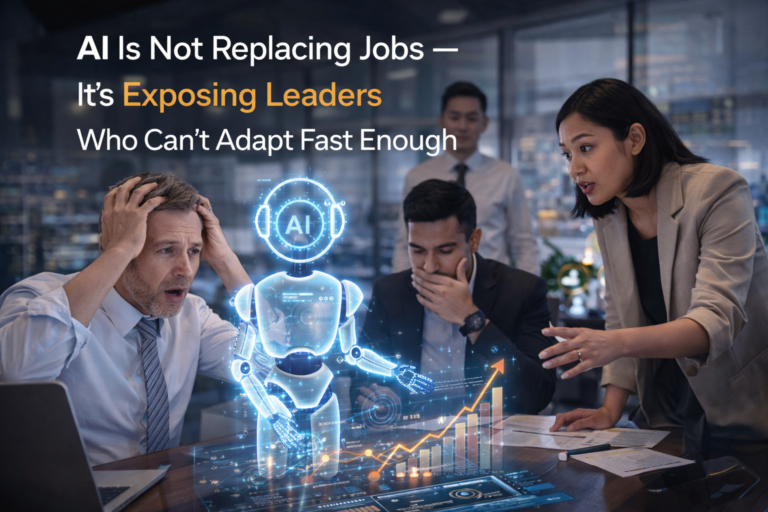
AI is everywhere. From automation tools to predictive systems, organisations are rushing to adopt new technologies in the name of Digital Transformation. But here is the uncomfortable truth: AI is not replacing jobs. It is exposing leaders who cannot adapt fast enough. This shift is subtle—but dangerous. Because while many organisations believe they are “progressing,” others are accelerating at a completely different speed. And in today’s AI-driven economy, speed is no longer an advantage. 👉 It is survival.
Many organisations believe the future is something that will come later. But in reality: 👉 The future is already being decided Right now. In: Strategy meetings Investment decisions Transformation initiatives Companies are already choosing: What capabilities to build What systems to implement What direction to take And most importantly: 👉 Who they will become in the next phase Because Digital Transformation is no longer about catching up. It is about positioning ahead.
For years, companies believed one thing: 👉 “We can solve everything internally.” Build internal teams. Hire consultants. Deploy systems. And control everything within the organisation. But today, that belief is breaking. Because Digital Transformation has evolved. It is no longer: Simple Linear Predictable It is: Complex Fast-moving Interconnected
Most companies believe they are competing on technology. AI tools. Automation systems. Digital platforms. But the reality is very different. Because today: 👉 Everyone has access to the same tools The real difference is not: Who has better technology It is: Who uses it better And that difference comes down to one thing: Workflow systems In the AI-driven economy, the companies that dominate are not those with the most tools— 👉 They are the ones with the strongest execution systems
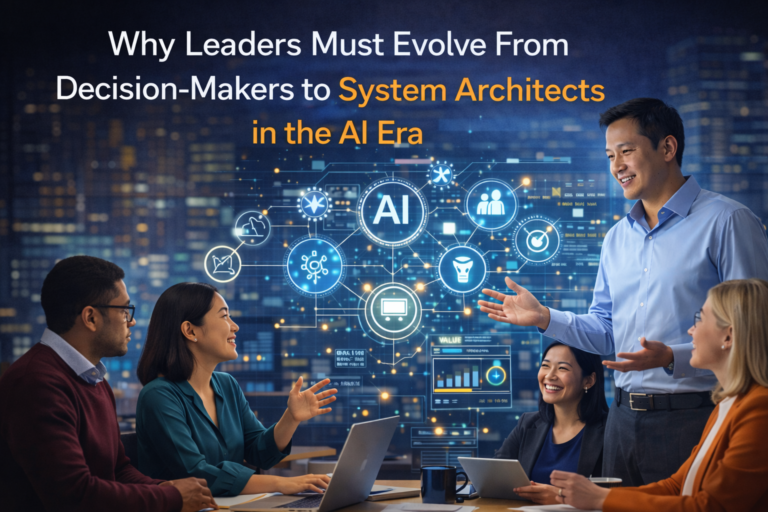
For decades, leadership followed a simple model. Leaders: Made decisions Delegated execution Relied on specialists And this worked. But today, in the age of AI and Digital Transformation, this model is no longer enough. Because the complexity of modern organisations has changed. Leaders are no longer just decision-makers. They must become system architects. And those who fail to evolve will struggle—not because they lack intelligence, but because they lack structural understanding.

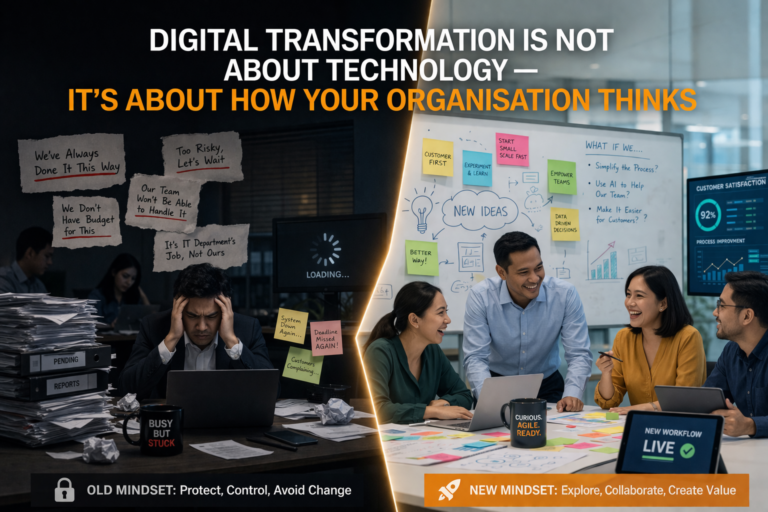
When organisations talk about Digital Transformation, the conversation almost always starts with technology. ERP systems. AI tools. Automation platforms. The assumption is simple: 👉 “If we choose the right system, everything will improve.” But this assumption is fundamentally flawed. Because the real driver of transformation is not technology. It is how your organisation thinks. And until this shifts, no system—no matter how advanced—will deliver real results.
Most organisations today are not lacking information. They already know: AI is important Digital Transformation is necessary Workforce must evolve They attend talks. They read reports. They invest in tools. And yet… 👉 Results remain limited. This leads to a critical question: If companies already know what to do… why are they still failing to execute? The answer lies in a hidden but powerful problem: 👉 The Execution Gap
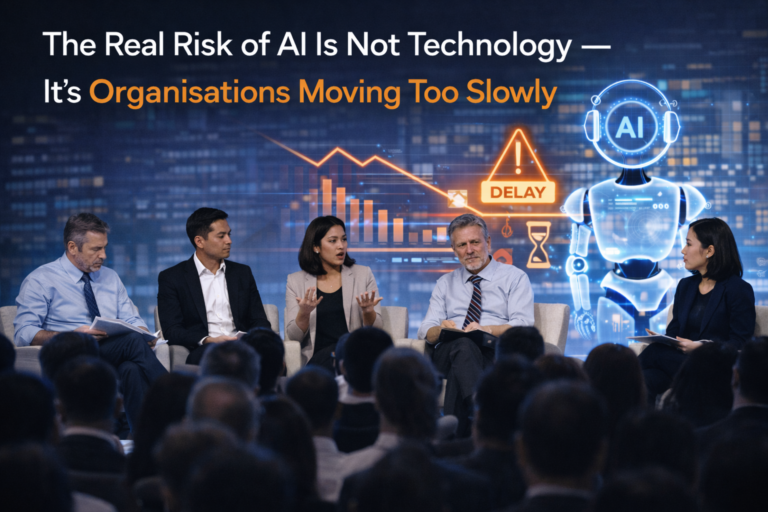
Most organisations today are doing something about AI. They are: Exploring tools Attending workshops Running pilot projects On the surface, it looks like progress. But here is the uncomfortable truth: The real risk of AI is not failure. It is moving too slowly. Because in today’s market, transformation is not judged by intention.

AI Education • Digital Transformation • Digital Trust

Scroll to Top